ETL vs ELT — Why the 'T' Moved to the End in the Cloud Era
The 'T' in ETL didn't disappear — it just got better timing. Learn why cloud warehouses enabled ELT, when ETL still makes sense, and how DBConvert Streams gives you both patterns in one platform. Plus: see custom SQL transformations during migration in action.
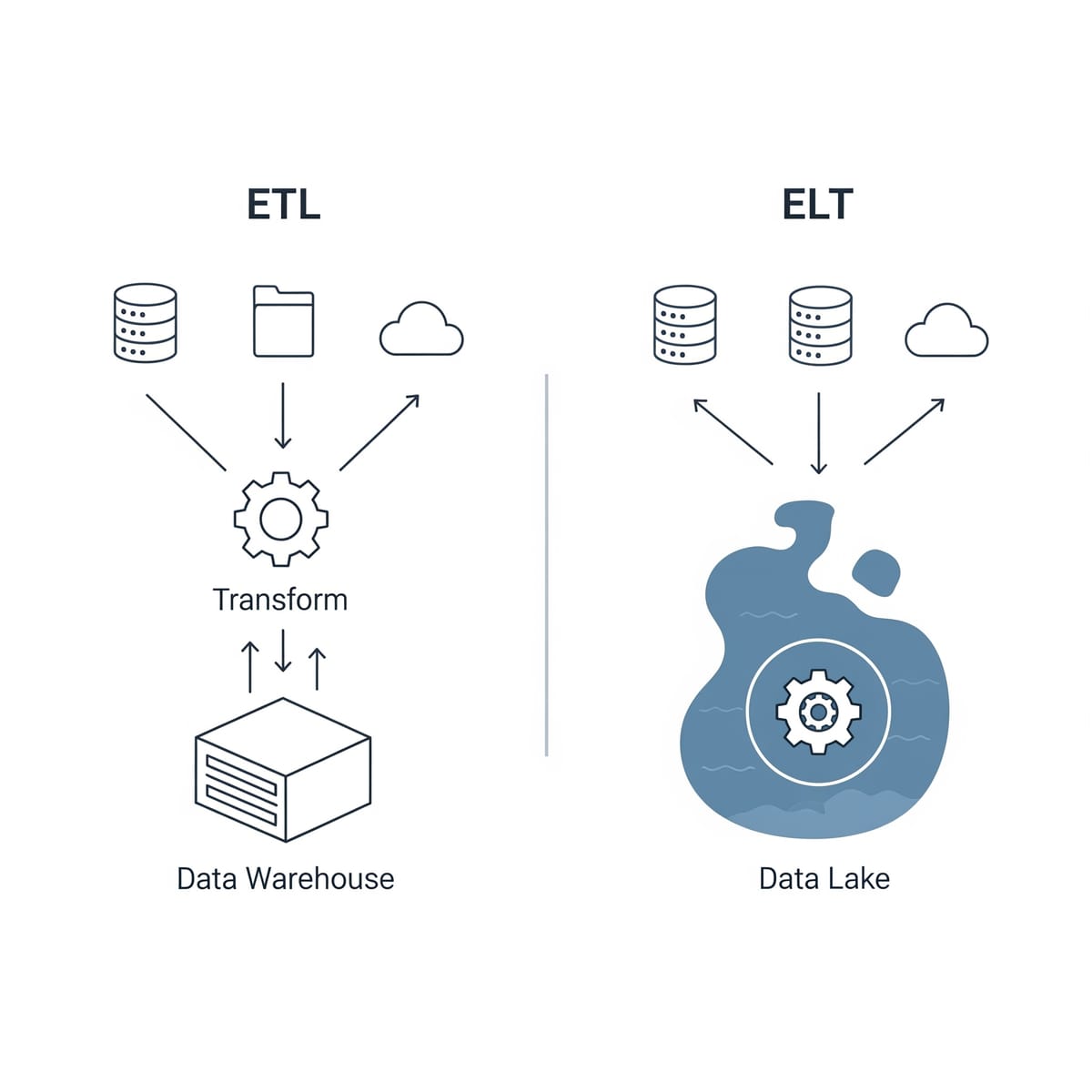
For decades, ETL (Extract → Transform → Load) was the standard playbook. Extract data from operational systems, transform it on dedicated servers, then load the cleaned result into a warehouse. This approach made perfect sense when compute was expensive and storage cost a fortune.
Then cloud-native data warehouses arrived — Snowflake, BigQuery, and Amazon Redshift — and suddenly ELT (Extract → Load → Transform) became a viable alternative.
So what changed, and why do both approaches still matter?
Cloud Warehouses Enabled New Possibilities
Modern cloud platforms deliver:
- Elastic compute: Spin up massive processing power in seconds, pay only for what you use
- Cheap, unlimited storage: Store petabytes of raw data for pennies per GB
- Built-in parallelism: Transform millions of rows using SQL across hundreds of cores simultaneously
When your warehouse can outperform dedicated ETL servers by 100x, new architectural patterns become possible.
Enter DBConvert Streams
DBConvert Streams supports both approaches depending on your needs:
Universal Features:
- Auto-schema recreation: Analyzes source structure and recreates it in the target — no manual DDL writing
- Cross-database compatibility: MySQL ↔ PostgreSQL, cloud to cloud, on-prem to cloud
Migration Mode (ETL with Custom Transforms)
- Custom SQL transformations: Apply your own SELECT queries during migration — case conversions, string cleaning, data type changes, filtering conditions
- Clean data on arrival: Transformed data lands ready-to-use in the target
CDC Mode (Real-Time ELT)
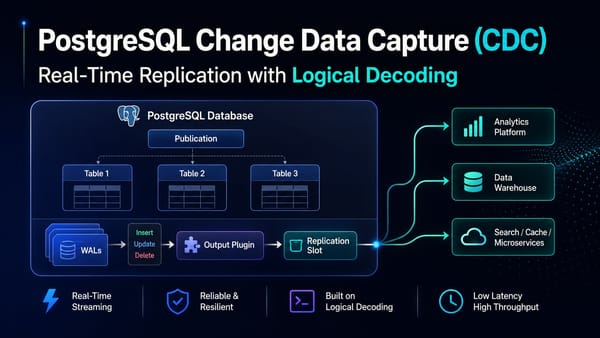
- Live change streaming: Captures every insert, update, and delete from transaction logs (WAL, binlogs)
- Raw data replication: Changes stream directly to target without transformation
- Near-zero downtime migrations: Keep systems in sync during cutover
- Event-driven architectures: Feed changes to multiple downstream systems in real-time
This dual approach puts DBConvert Streams alongside established tools like Fivetran, Airbyte, Kafka Connect, Debezium, and Flink in the data integration landscape.
When to Choose ETL vs ELT
ETL Works Best For:
- Data quality enforcement during migrations where you know exactly what transformations are needed
- Compliance and governance — transform sensitive data before it reaches the target
- Legacy system cleanups where source data requires significant restructuring
- Real-time streaming: DBConvert Streams CDC, Kafka, Debezium, and Flink for sub-second transformations
ELT Works Best For:
- Raw data preservation — load everything first, decide what to do with it later
- Multiple team access — enable different teams to model the same data differently
- Schema flexibility — handle evolving APIs and JSON structures without pipeline breaks
- Exploratory analytics where transformation requirements aren't fully known upfront
Custom Transformations During Migration
DBConvert Streams demonstrates that you don't have to choose between ETL and ELT — you can transform data during the migration process:
-- Custom SQL transformations applied mid-flight
SELECT
    id,
    UPPER(full_name) AS full_name,
    LOWER(email) AS email,
    DATE(registered_at) AS registered_at
FROM users
WHERE email IS NOT NULL;
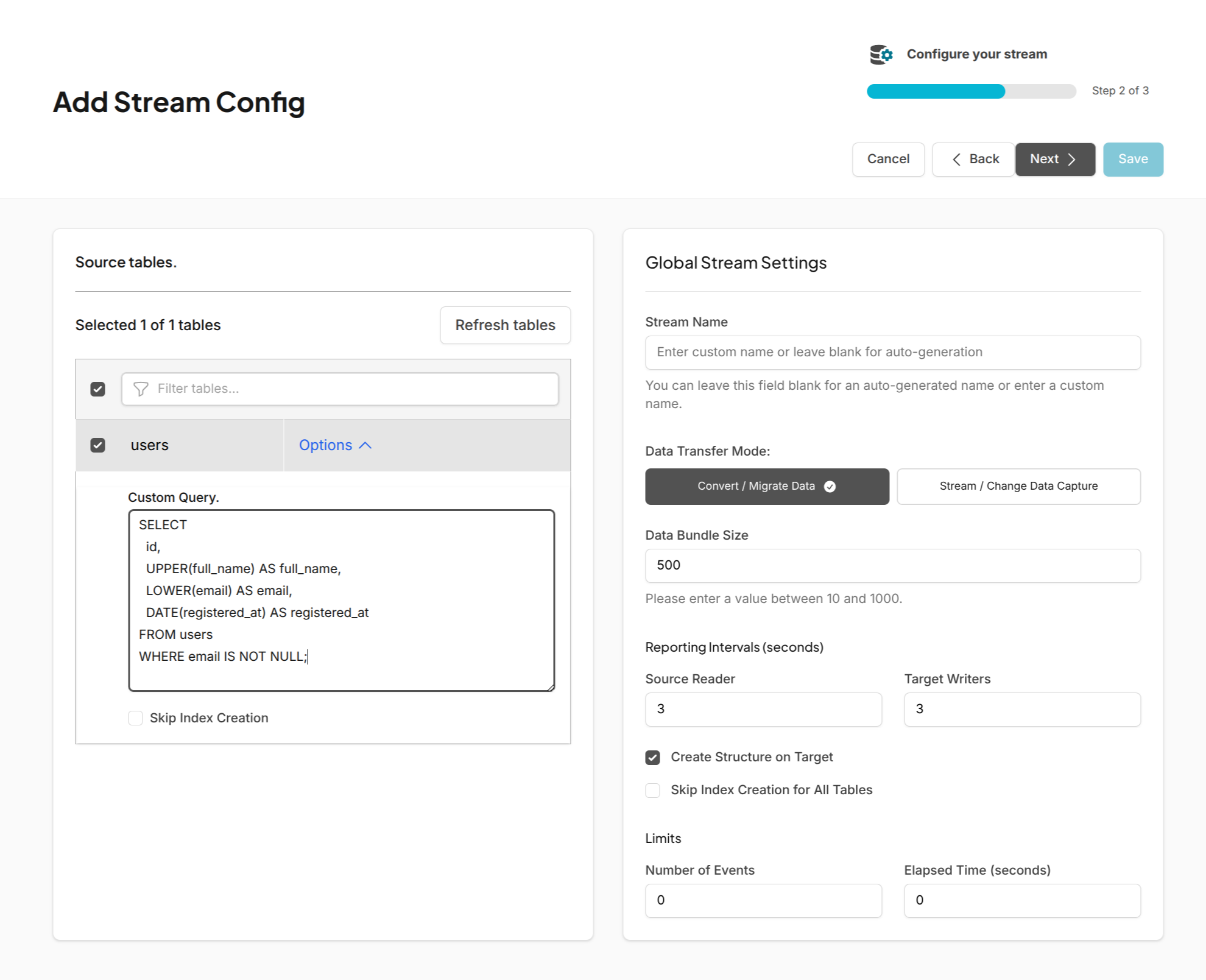
See it in action: Watch our demo video showing how to transform user data from MySQL to PostgreSQL with custom SQL queries — converting names to uppercase, normalizing emails, formatting dates, and filtering nulls, all through a visual interface with no code required.
Custom SQL for ETL
Benefits of mid-flight transformations:
- Clean data arrives ready-to-use — no post-load cleanup needed
- Filter out bad records during migration — save storage and processing
- Cross-database type conversions — handle MySQL ↔ PostgreSQL differences automatically
- No separate ETL infrastructure — transformations happen within the migration stream
The Modern Data Stack
Whether you choose ETL or ELT, modern tools work together:
- Extract/Load: DBConvert Streams, Airbyte, Fivetran handle data movement
- Transform: dbt, SQL, Python notebooks handle business logic
- Analyze: BI tools connect to clean, modeled data
The Verdict
The 'T' didn't disappear — it got more flexible timing options.
DBConvert Streams embraces this flexibility:
- Migration Mode: ETL with custom transformations during data movement
- CDC Mode: ELT with raw data streaming for downstream transformation
In the cloud era, the question isn't ETL versus ELT — it's having a platform that can handle both, so you can choose the right approach for each specific use case.
Ready to Try Both ETL and ELT?
Start your free trial of DBConvert Streams today:
Get Started Free — No credit card required
View Documentation — Complete setup guides
Watch Demo Videos — See it in action
Need help choosing the right approach? Our team can help you determine whether Migration Mode (ETL) or CDC Mode (ELT) fits your specific use case. Contact us for a free consultation.